
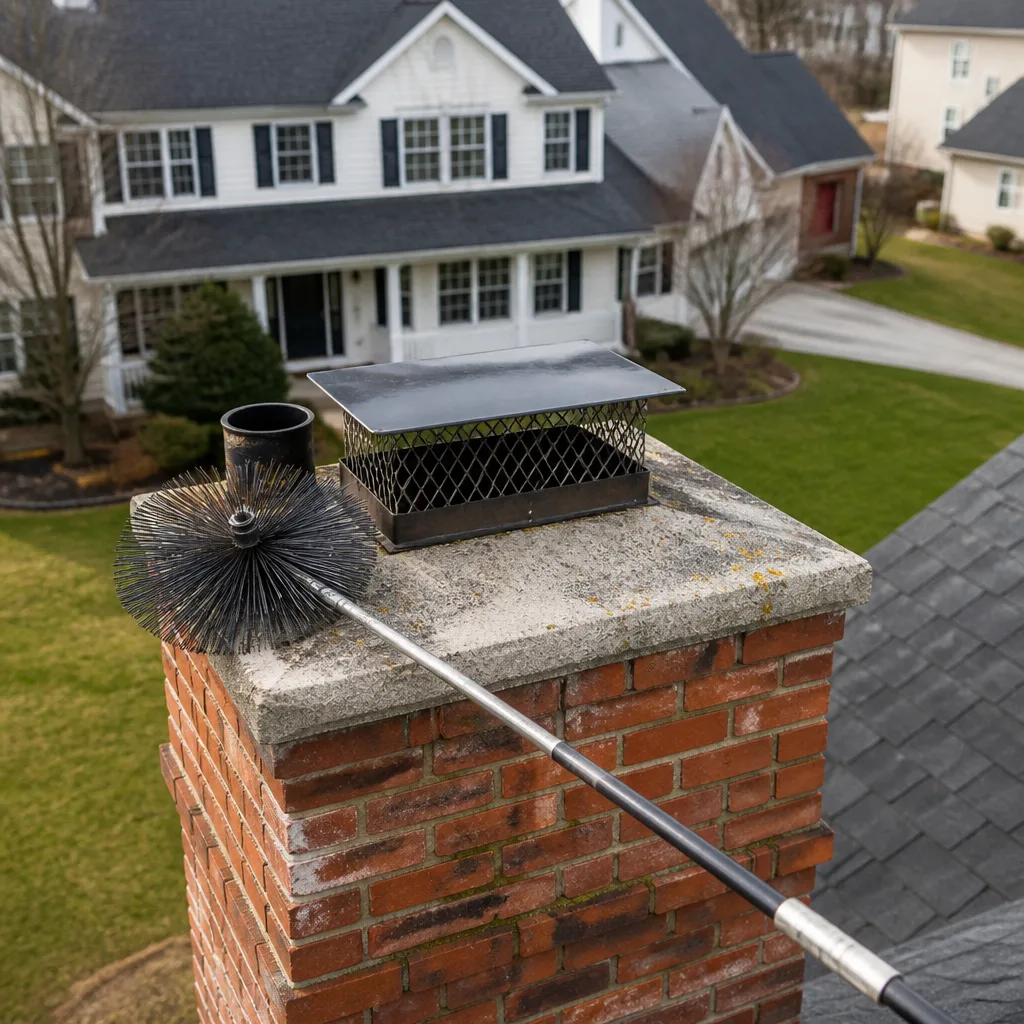
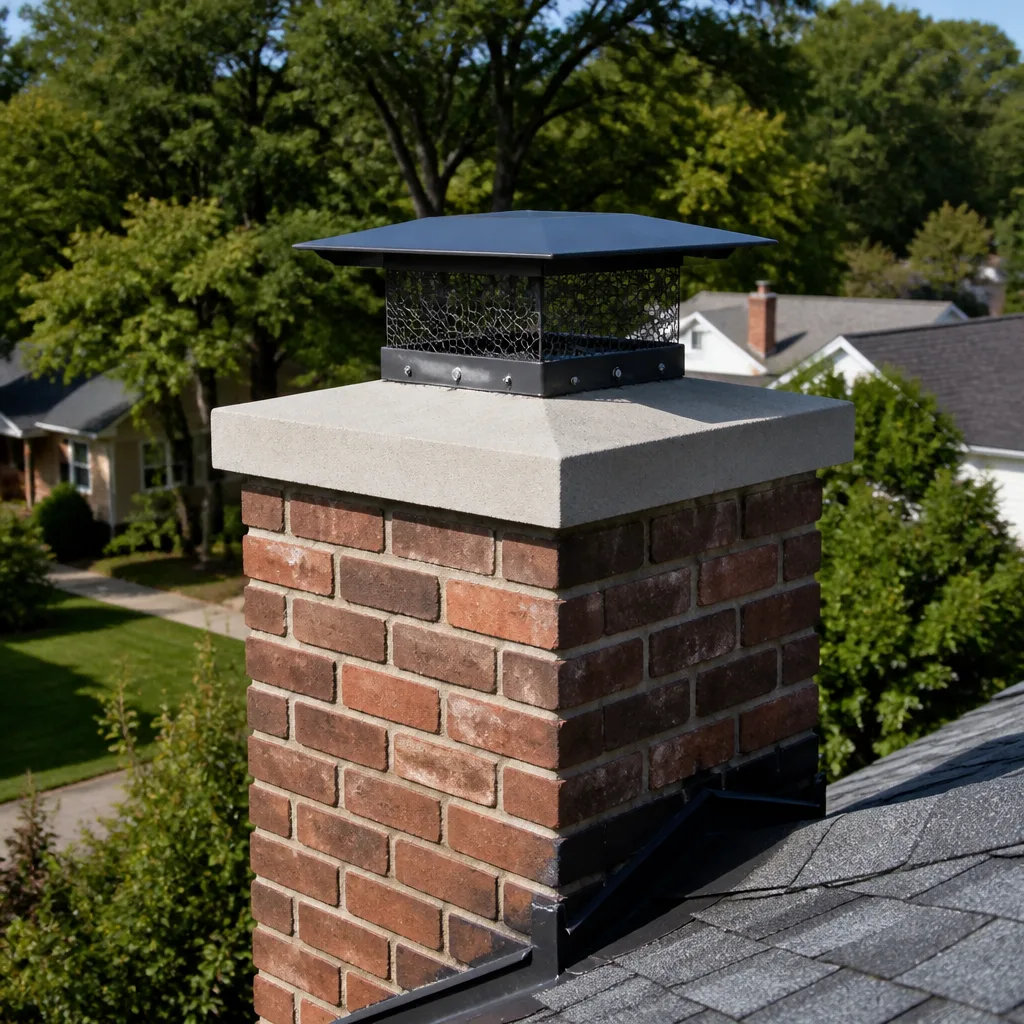
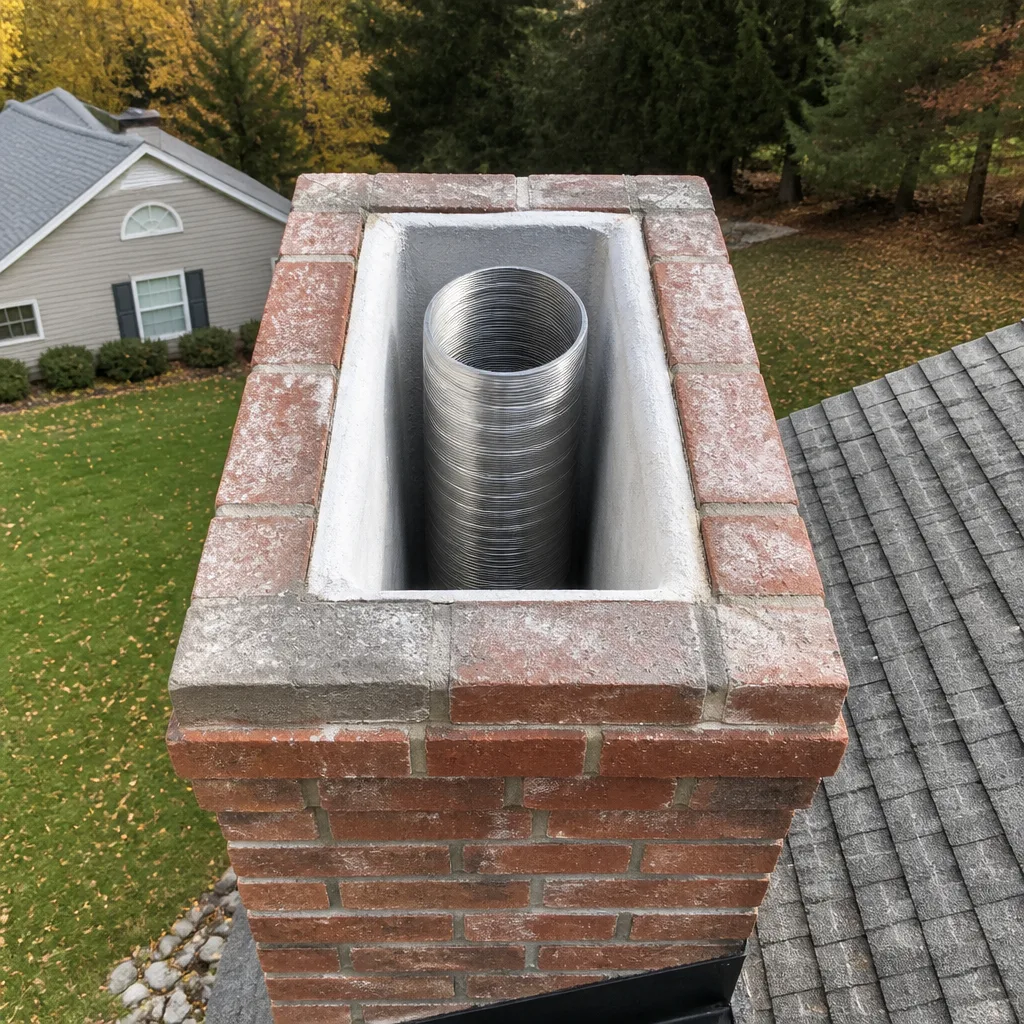
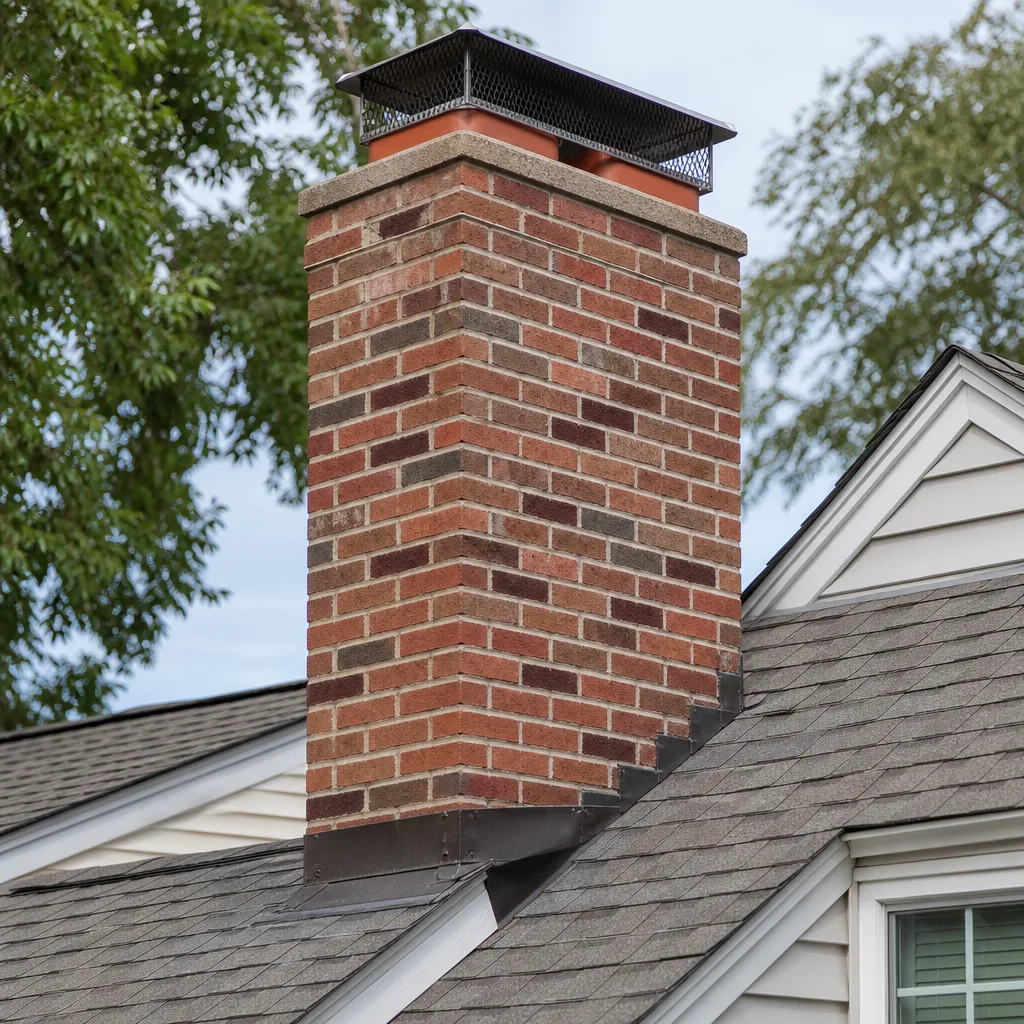
Level 1 sweep and inspection to the NFPA 211 annual standard - flue, crown, cap, and flashing checked and photographed
Chimney sweep logs do not sweep chimneys. They loosen some creosote - which then falls where a brush and vacuum still have to collect it.
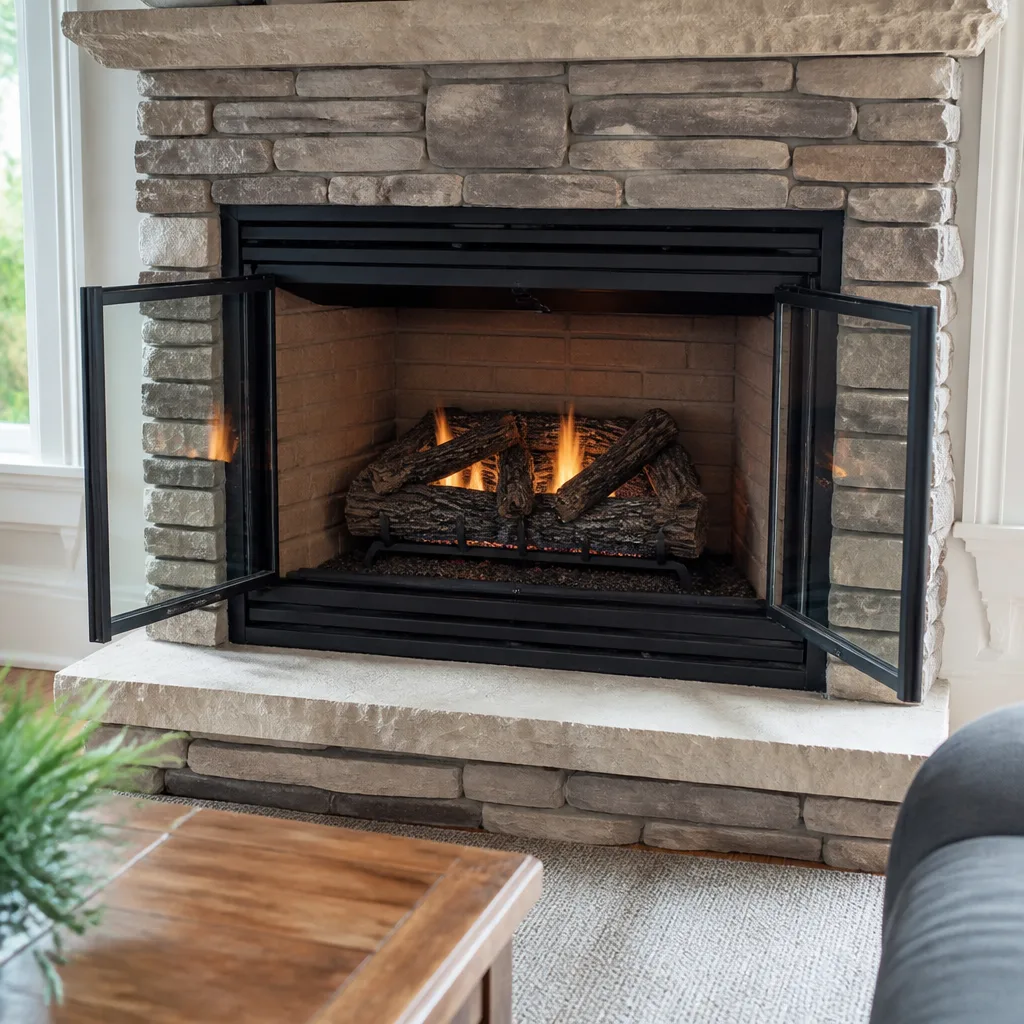
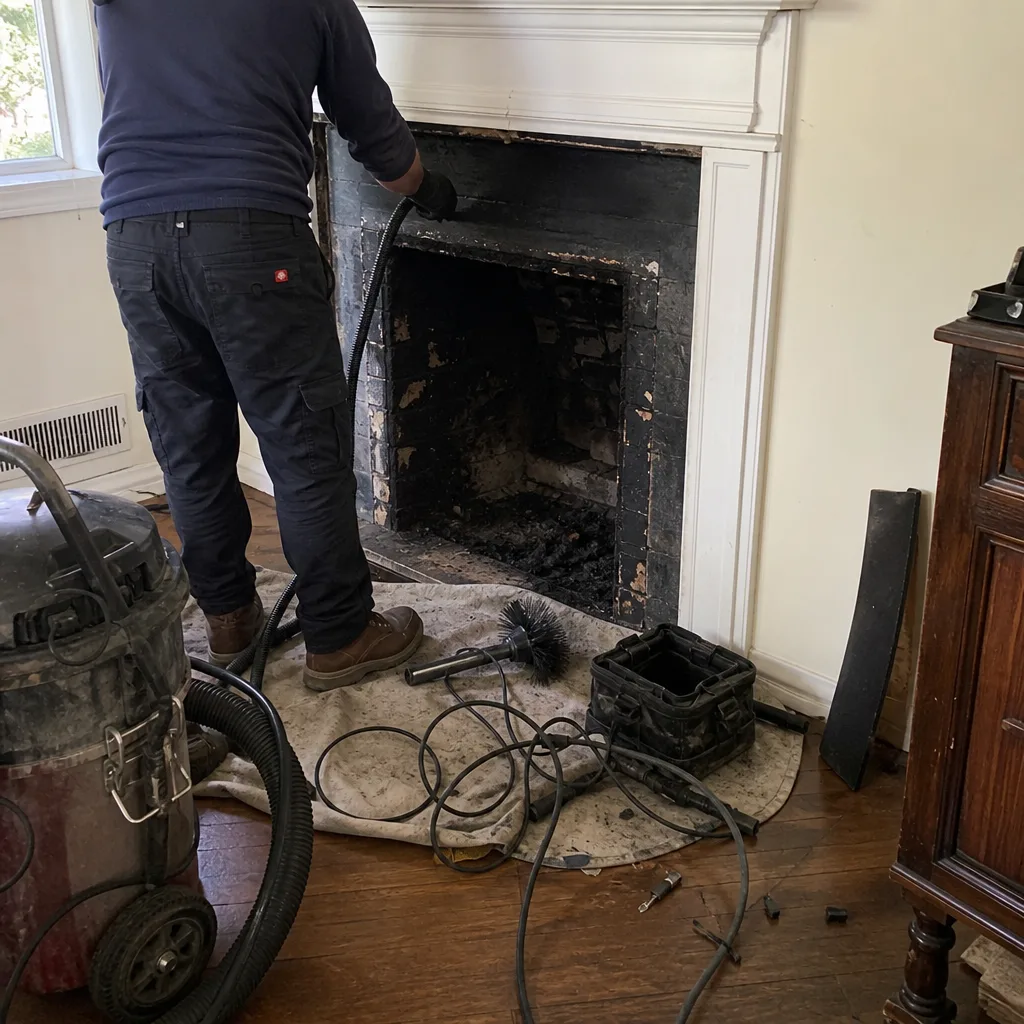 Before
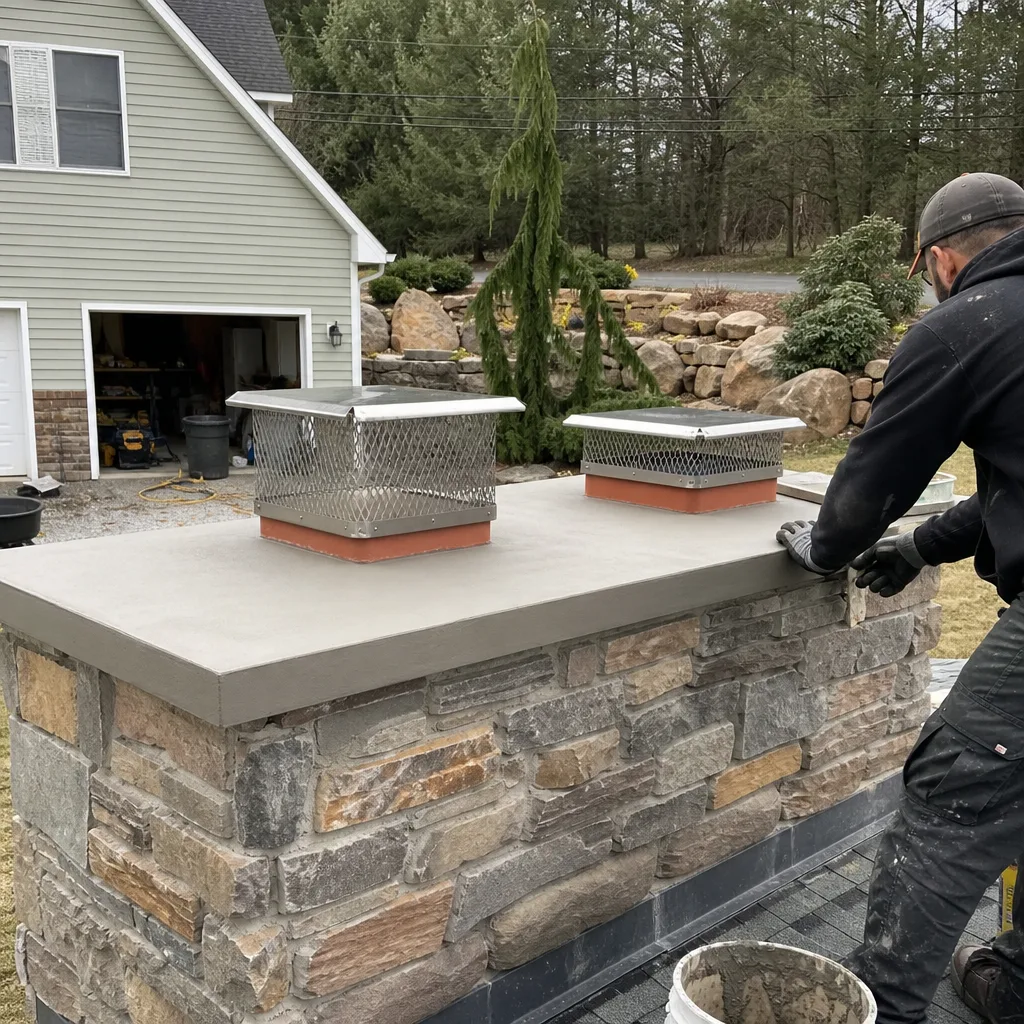 After
After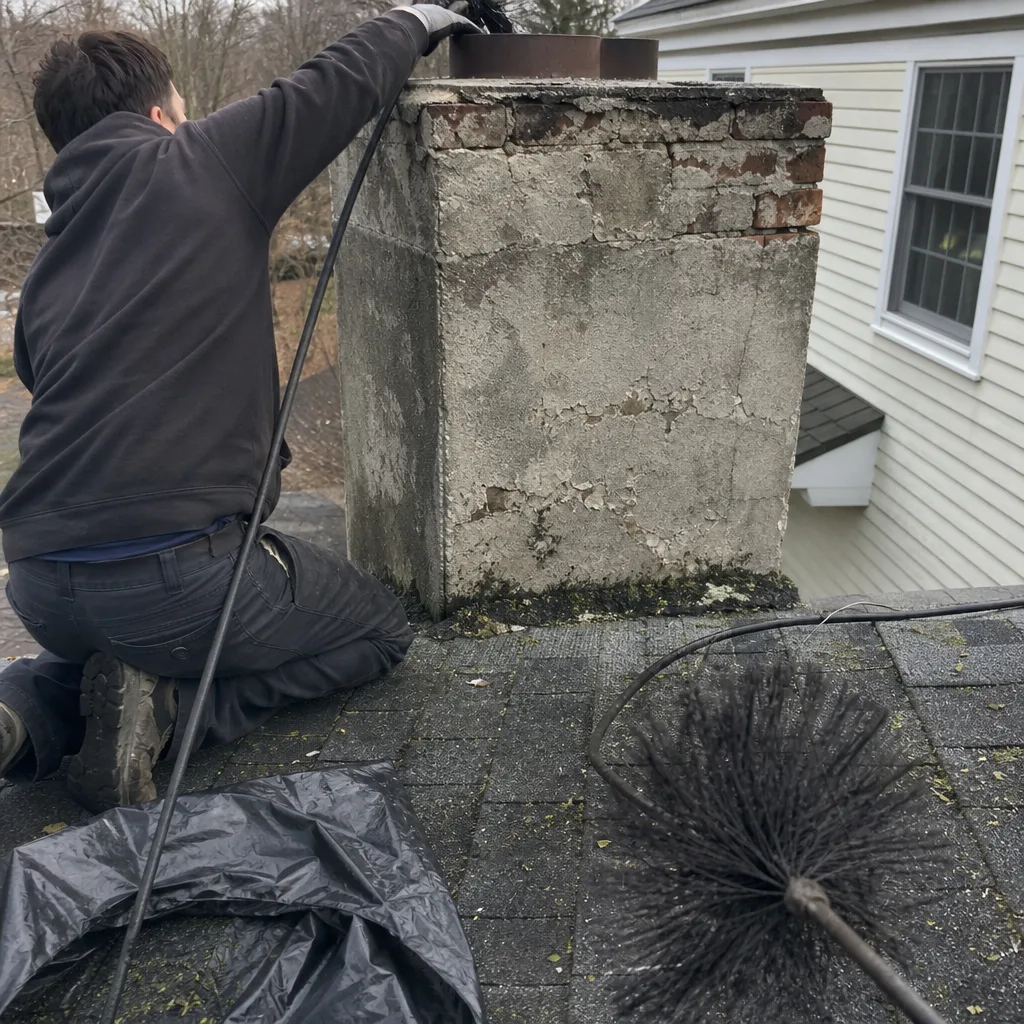 Before
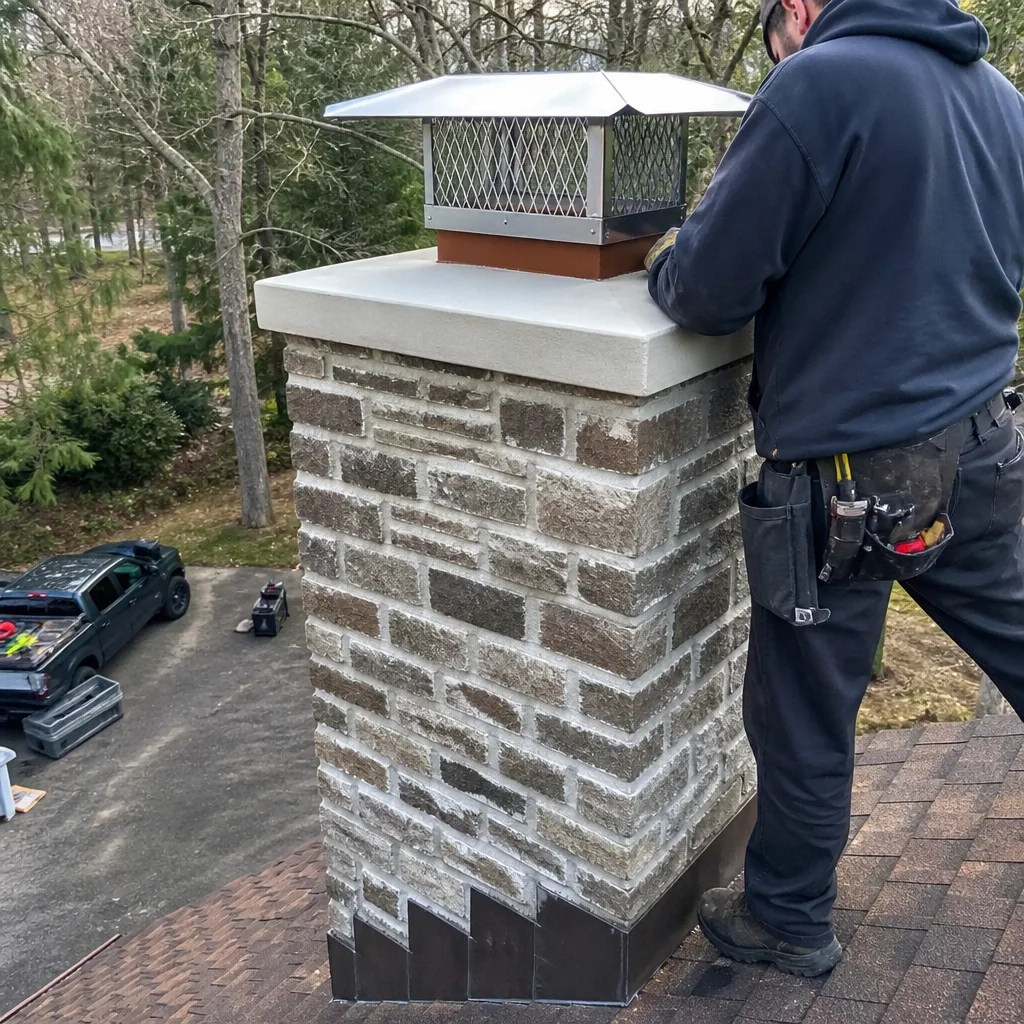 After
After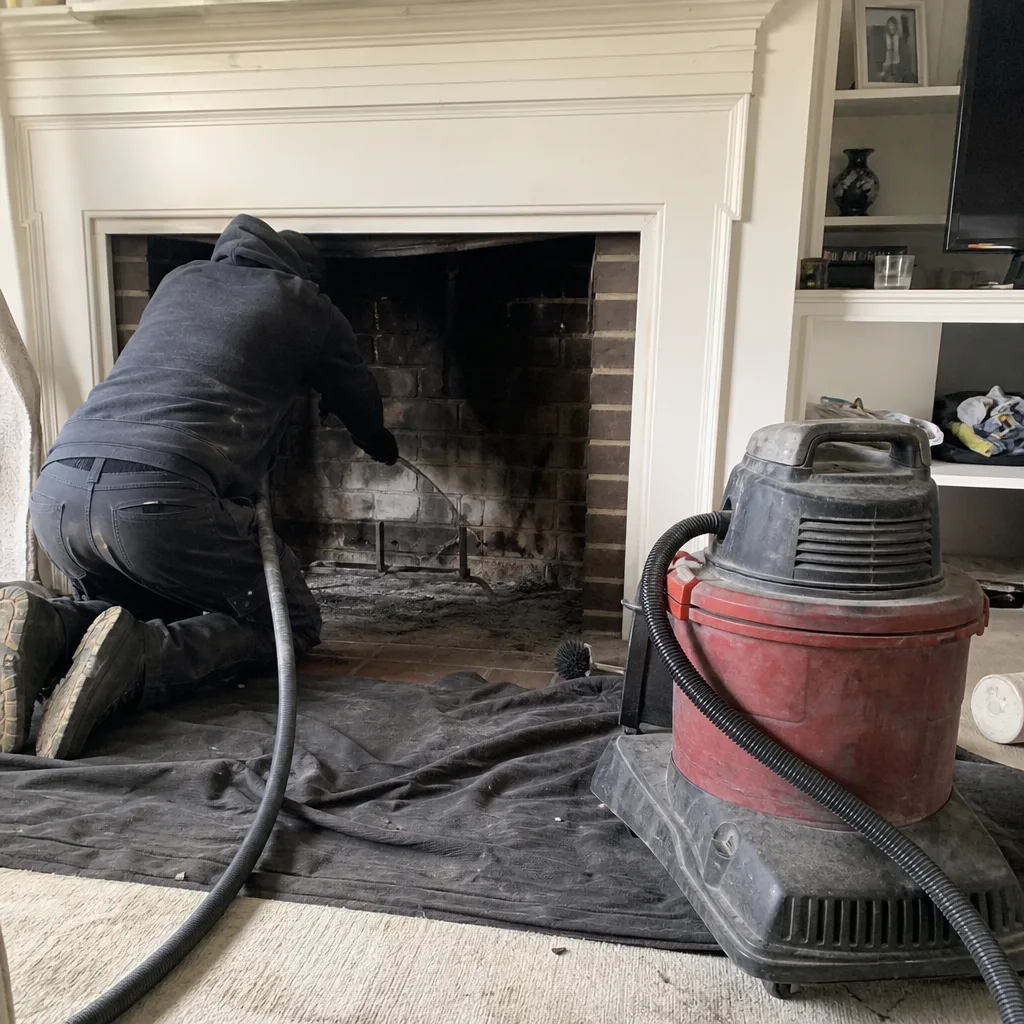 Before
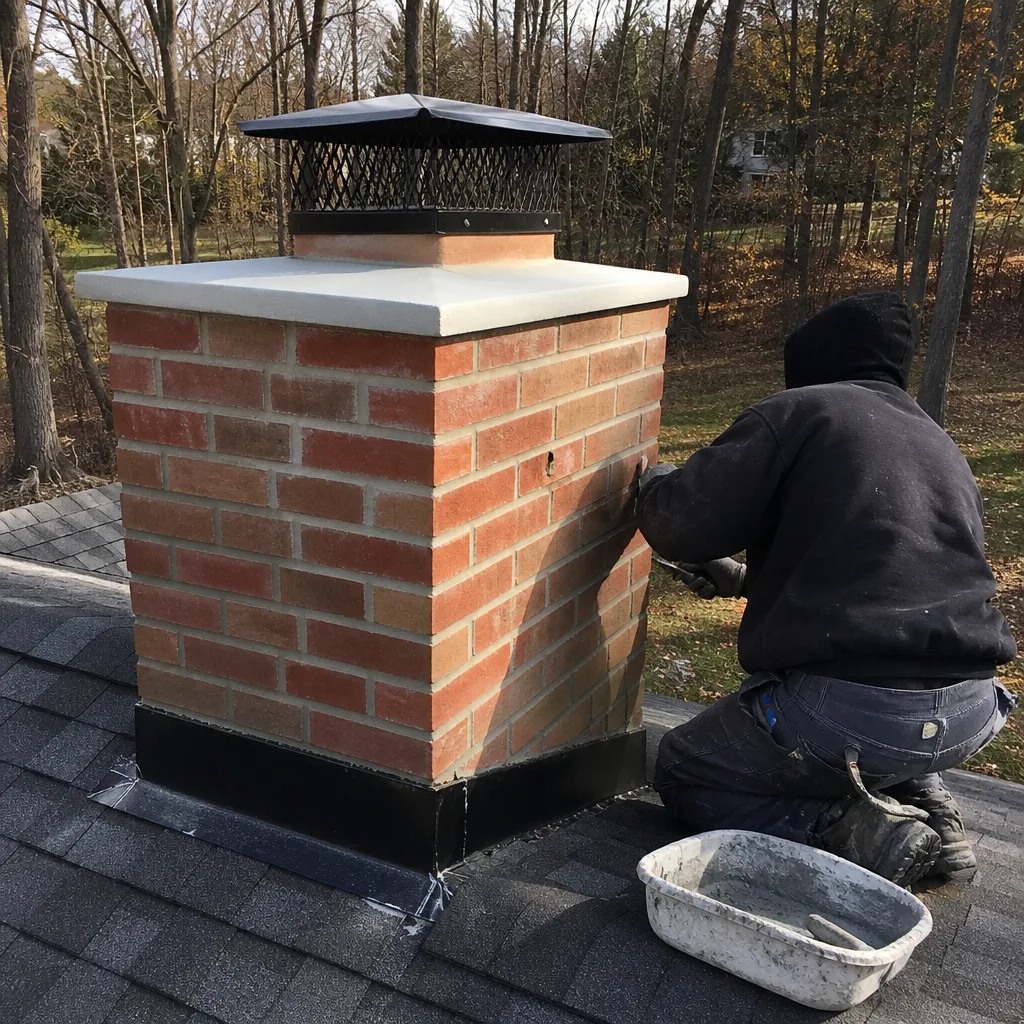 After
AfterSpalling Brick Repair in Westchester County, NY
Spalling brick is what happens when water gets into the face of a brick, freezes, and pries the surface layer loose – sometimes in thin flakes, sometimes in chunks the size of your palm. If you’re seeing red-orange crumbles on the ground around your chimney base, or patches where the brick face has popped off and left a rougher, pitted surface behind, that’s spalling. Left alone through another Westchester winter, it gets worse every freeze-thaw cycle. Caught early, it’s a repair job. Caught late, it’s a rebuild.
At Top Hat Chimney, Wendell Pike has been repairing spalling brick on chimneys across Westchester County since 1999 – in old colonials in Pleasantville, 1960s splits in Ossining, fieldstone-foundation farmhouses in Pound Ridge, and everything in between. If you’re looking at flaking brick right now and wondering whether it’s serious, call (914) 537-6479. We answer live, around the clock, and we’ll give you a straight answer before we ever get to pricing. For a full picture of what we handle structurally, visit our Chimney Repair in Westchester County page.
What Is Spalling and Why Does Westchester’s Climate Make It Worse?
Brick is a porous material. It absorbs water – through rain, through condensation, through a compromised chimney crown that lets water sheet down the sides of the stack instead of draining away from it. In a milder climate, that moisture might just dry out. In Westchester County, it freezes.
We average somewhere between 30 and 40 freeze-thaw cycles per year here. Each cycle is a small hydraulic event: water seeps in, expands by roughly 9 percent when it turns to ice, and pushes against the brick face from the inside. One cycle does almost nothing. Thirty cycles over a decade does a lot. That’s why chimneys built solid in the 1970s start showing spalling in the 1990s and why a chimney that looked fine last spring sometimes surprises you in April after a rough winter.
Chimneys in the northern parts of the county – Yorktown, Somers, Lewisboro – tend to see this a little earlier and a little harder than chimneys closer to the Sound. Higher elevation, colder average lows, more wind exposure. If you’re in those areas and your chimney is more than 20 years old, it’s worth having someone look at it even if you haven’t noticed anything on the ground yet.
When You Need Spalling Brick Repair
- Brick debris or red dust around the chimney base. This is usually the first sign homeowners notice – small flakes or a gritty red-orange powder that collects on the roof, in the gutters, or on the ground below the stack. It doesn’t always mean catastrophic damage, but it does mean the deterioration has started.
- Visible pitting or flaking on the chimney face. If you can see rough, cratered spots where the brick face has separated, that’s active spalling. The damage you can see is almost always accompanied by damage you can’t – water that’s already working its way deeper into the mortar joints.
- Mortar joints that are recessed, crumbling, or missing entirely. Spalling and tuckpointing failures usually travel together. When the mortar goes, water has a direct channel into the brick. When the brick goes, the mortar has nothing solid to grip. Wendell and his crew address both at the same time because patching one without the other is just buying yourself another service call in two years.
- Interior water staining on the ceiling or firebox walls. If water is finding its way through the chimney structure into your living space, spalling on the exterior is a likely contributor – especially if the crown or cap has already been ruled out. In Westchester County homes with older clay tile liners, that moisture path can deteriorate the liner at the same time it’s eating the exterior brick.
- White staining (efflorescence) on the chimney face. That chalky white residue is mineral salt being carried to the surface by water moving through the brick. It’s not dangerous by itself, but it’s a reliable signal that water is moving through the masonry in a way it shouldn’t be. Efflorescence that keeps coming back after washing means the source hasn’t been addressed.
- Brick faces that sound hollow when tapped. A brick that has delaminated internally will have a noticeably different sound than a solid one. If you’re up on a ladder doing gutter work and you knock a knuckle against the chimney, a hollow thud instead of a solid thunk means the face has separated from the body of the brick – even if it hasn’t fallen off yet.
Our Spalling Brick Repair Process
We don’t show up, poke at a couple of bricks, and hand you a quote for a full chimney rebuild. The point of the inspection is to understand exactly what’s failing and why – so the repair we do actually fixes the problem instead of just covering it.
- Full visual and hands-on inspection of the chimney exterior. Wendell or one of his crew works the entire stack – crown to base – checking for spalling depth, mortar joint condition, and any structural movement. We look at the cap, the crown, and the flashing too, because spalling rarely happens in isolation. If there’s a water source that hasn’t been addressed, new brick won’t stay new for long.
- Documenting what we find and explaining it in plain language. Before a single tool comes off the truck, you get an upfront price and a clear description of what we found, what we recommend, and what happens if the repair isn’t done. No surprises on the invoice. The number you hear on the phone is the number on the invoice.
- Removing damaged brick and prepping the surface. Spalled bricks that have lost structural integrity get removed cleanly – not just patched over. We cut out deteriorated mortar to a proper depth so the new material has something solid to bond to. Shallow patches that sit on top of failing mortar don’t last; we’ve seen enough of those done by other outfits to know exactly how they fail and when.
- Replacing with matched brick and fresh mortar. For Westchester County homes, matching the brick profile and color matters. We source replacement brick to get as close as possible to the original – not just functionally, but visually. The mortar mix is matched to the age and hardness of the existing masonry; a mortar that’s too hard for an older soft brick causes more spalling, not less.
- Tuckpointing deteriorated joints. Any mortar joint showing recession, cracking, or voids gets repointed as part of the same visit. This is standard practice for us on any spalling repair job because the joints are almost always compromised when the brick is.
- Applying a breathable water repellent to the repaired area. Once the repair has cured, we apply a penetrating, vapor-permeable water repellent to the treated section. “Breathable” matters here – a film-forming sealer traps moisture inside the masonry and accelerates the very problem you just paid to fix. The product we use lets water vapor out while keeping liquid water from getting in. On some jobs, particularly where we’re working with Gelco or Olympia Chimney materials, the manufacturer’s own application guidelines inform how we seal the finished surface.
Spalling Brick Repair Pricing in Westchester County
Spalling brick repair in Westchester County typically runs between $350 and $2,500, depending on how much of the chimney is affected and what else is found during the inspection. That’s a wide range, and it’s an honest one – a single deteriorated course near the crown is a very different job from a stack where three sides have been spalling for a decade.
| Scope of Work | Typical Price Range |
|---|---|
| Minor spalling repair (1-10 bricks, single face) | $350 – $650 |
| Moderate repair with tuckpointing (10-30 bricks) | $650 – $1,200 |
| Extensive repair, multiple faces, crown work included | $1,200 – $2,500 |
| Water repellent application (add-on) | $100 – $250 |
| Partial chimney rebuild (severe structural damage) | $2,500 and up |
What drives the cost up or down: how high off the roof the damaged area sits (scaffolding vs. ladder work), whether the crown or cap needs attention at the same time, how closely we can match the original brick, and how deep the moisture damage has penetrated into the structure. Older Westchester County homes – particularly those built between 1920 and 1960 – sometimes used softer brick than what’s standard today, and sourcing a good match takes a little more time.
Every repair over $200 gets $40 off, automatically. Seniors and veterans always get 10% off their total. And if another chimney company has already given you a written estimate, we’ll give you a free second opinion – no charge, no obligation.
Estimates are free and upfront. Call (914) 537-6479 and get an exact number before we start anything.
The 90-Day Done Right Promise
Every repair we do – spalling brick included – is backed by the 90-Day Done Right Promise. That means if something’s not right with the work within 90 days, one call brings Wendell and his crew back at no additional cost. Not a call center. Not a new estimate. Just us, back at the chimney, making it right.
Wendell puts his name on the work. That’s not a figure of speech – his name is on the truck, on the invoice, and on the license number. If the repair fails, he’s going to hear about it, and he’s going to fix it. That’s how it’s worked since 1999, and it’s not changing.
Key Takeaways
- Westchester County’s 30-40 annual freeze-thaw cycles make chimney spalling faster and more destructive than in milder regions – early repair saves money.
- Red crumbles at the chimney base, pitted brick faces, and efflorescence are all signals to act before winter.
- The repair has to address the water source, not just the damaged brick – otherwise the new brick spalls too.
- Mortar matching matters: too-hard mortar on older soft brick creates new spalling within a few years.
- Every Top Hat Chimney repair over $200 gets $40 off; seniors and veterans get 10% off always.
- The 90-Day Done Right Promise is in writing on every job.
FAQs – Spalling Brick Repair
Can I just seal over spalling brick instead of replacing it?
Sealing over active spalling doesn’t fix the damage – it hides it and usually makes it worse. A film-forming sealer traps the moisture that’s already inside the brick, and that trapped water keeps doing what water does in a freeze-thaw cycle. The right sequence is: remove the damaged material, repair the source of the water entry, replace or repoint, then apply a breathable water repellent after everything has cured. We see DIY sealer jobs regularly in Westchester County, and they almost always mean more brick has to come out than if nothing had been done. Call (914) 537-6479 for a free look before you buy a can of anything.
How much does spalling brick repair cost in Westchester County?
Most spalling brick repairs in Westchester County fall between $350 and $2,500, depending on how many bricks are affected, how many faces of the chimney are involved, and whether the crown or cap needs work at the same time. Minor repairs on a single face – say, 5 to 10 bricks near the top – are usually on the lower end of that range. Extensive damage that’s been developing for years can push into rebuild territory. The only way to get an accurate number is a real inspection, and ours is free. Call (914) 537-6479 and we’ll give you an upfront price before anything starts.
Is spalling brick a sign my whole chimney needs to be rebuilt?
Not usually, no. Spalling often starts on one or two faces and stays localized for years before it becomes a structural concern. The inspection tells us whether we’re dealing with cosmetic surface damage, moderate deterioration that repair can address, or a situation where the structural core of the chimney is compromised. The honest answer is that most chimneys we see in Westchester County with spalling don’t need a full rebuild – they need targeted repair and a water source fixed. We’ll tell you plainly which category yours falls into, and we’ll tell you what happens if you wait on it.
How long will a spalling brick repair last?
A properly done spalling repair – with the damaged brick removed, the correct mortar mix used, the water source addressed, and a breathable sealer applied – should last 15 to 25 years on a Westchester County chimney in normal conditions. The biggest variable is what happens to the crown and cap after the repair: if water starts sheeting down the sides of the stack again because the crown cracks, the repaired brick starts the same cycle all over. That’s why we look at the whole chimney during the inspection, not just the visible damage. Our 90-Day Done Right Promise covers the work we do; proper annual inspection keeps the rest of the chimney from creating new problems after we leave.
Serving All of Westchester County
Top Hat Chimney handles spalling brick repair across Westchester County – including Yonkers, White Plains, New Rochelle, Mount Vernon, Peekskill, Ossining, Tarrytown, Dobbs Ferry, Ardsley, Scarsdale, Mamaroneck, Larchmont, Harrison, Rye, Port Chester, Pleasantville, Chappaqua, Yorktown Heights, Somers, Pound Ridge, Bedford, and everywhere in between. No trip charge inside the county. If you’re on the fence about whether your chimney is far enough out, just call – we’ll tell you straight.
For the full range of structural chimney work we handle, see our home page or go directly to Chimney Repair in Westchester County for a complete breakdown of what we fix and how we price it.
Ready to Stop the Damage Before Next Winter?
Spalling doesn’t wait, and neither does water. If you’re seeing brick debris around your chimney base, or patches where the face has already started to pop, the time to deal with it is before the next freeze-thaw season starts. Call Top Hat Chimney at (914) 537-6479 – a live person picks up, day or night, and it may be Wendell himself. We’ll schedule a free inspection, give you an upfront price before we touch anything, and back every repair with the 90-Day Done Right Promise in writing.
Written by Wendell Pike, Owner at Top Hat Chimney, serving Westchester County since 1999.