
Last updated September 10, 2026
Level 1 sweep and inspection to the NFPA 211 annual standard - flue, crown, cap, and flashing checked and photographed
Chimney sweep logs do not sweep chimneys. They loosen some creosote - which then falls where a brush and vacuum still have to collect it.
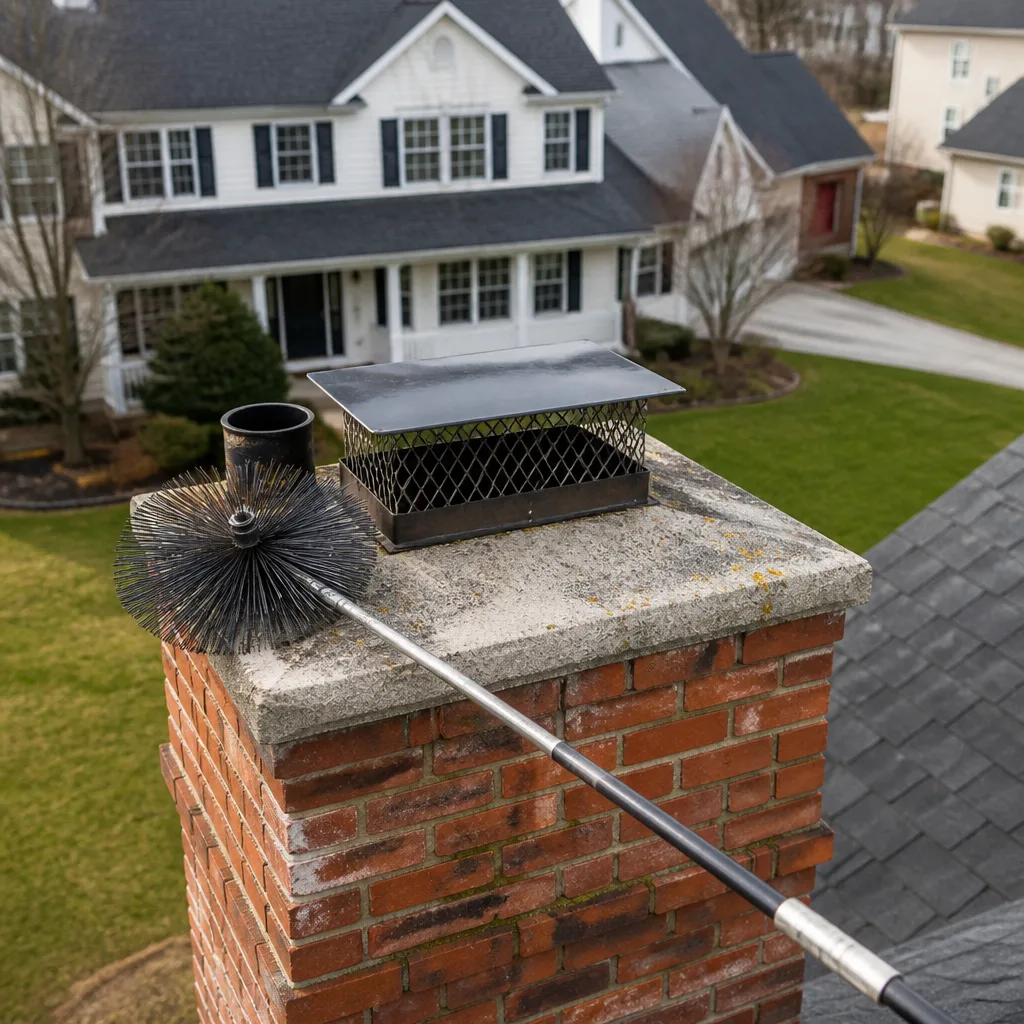
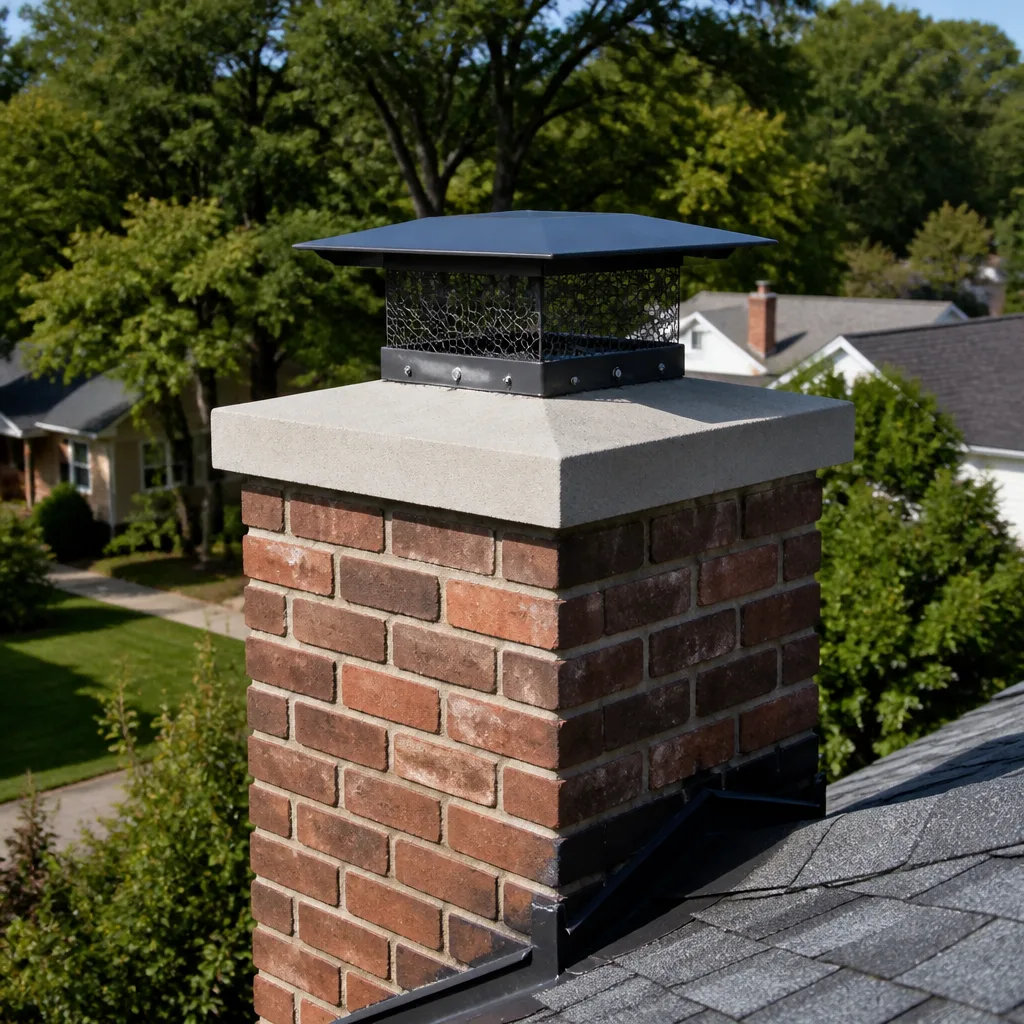
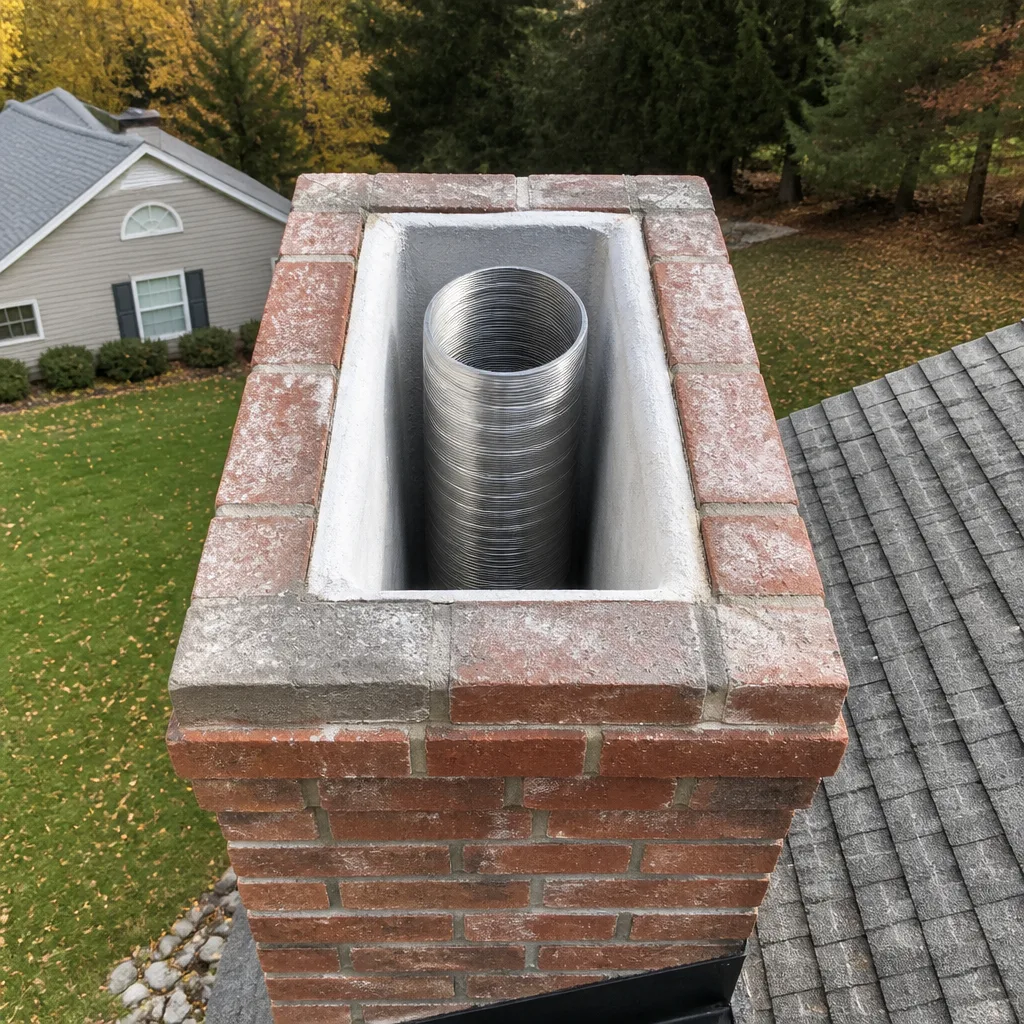
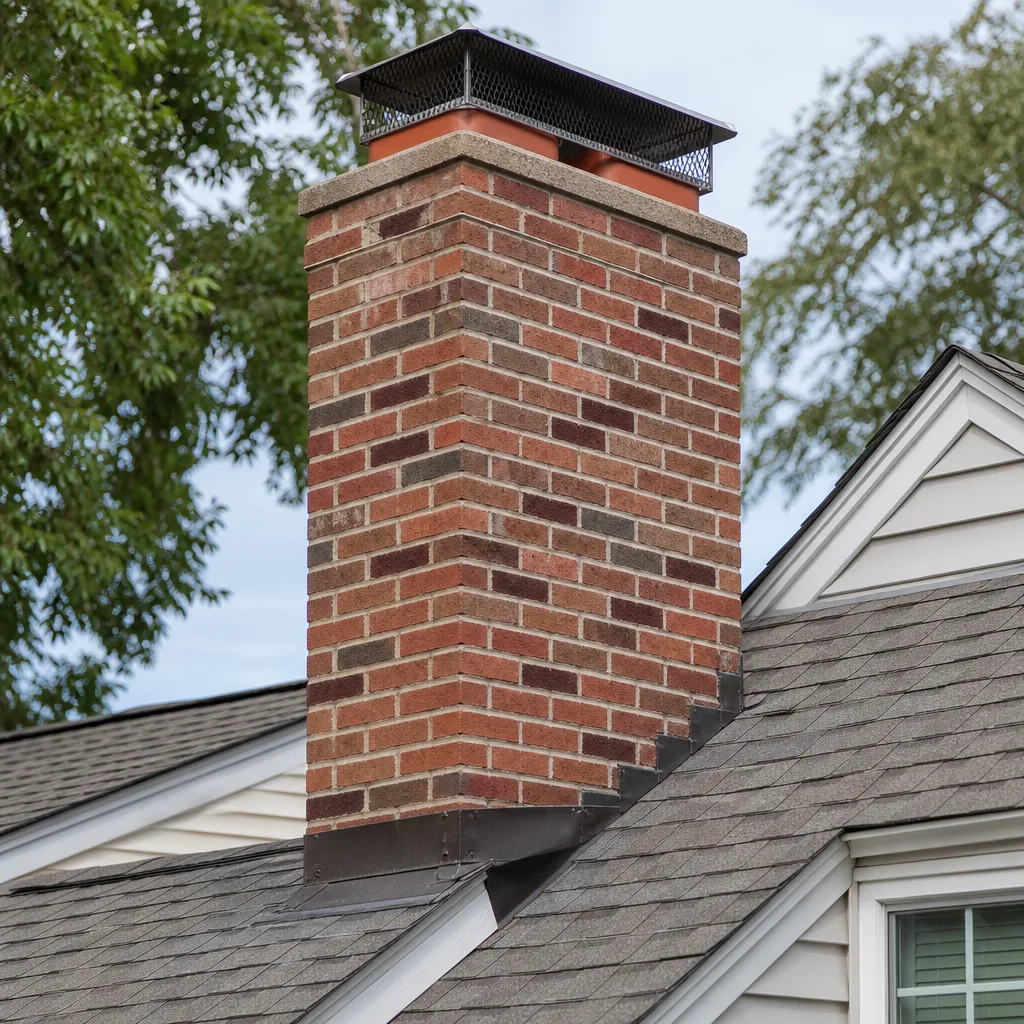
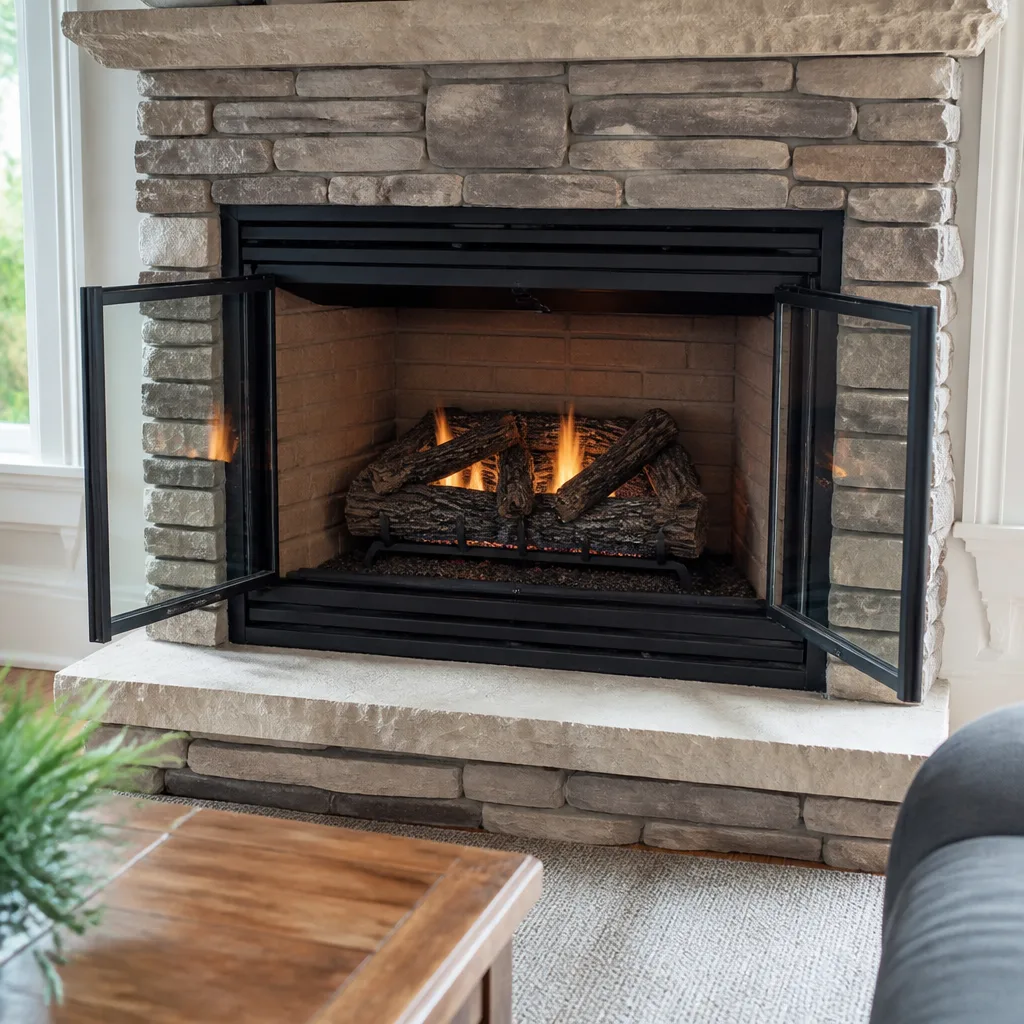
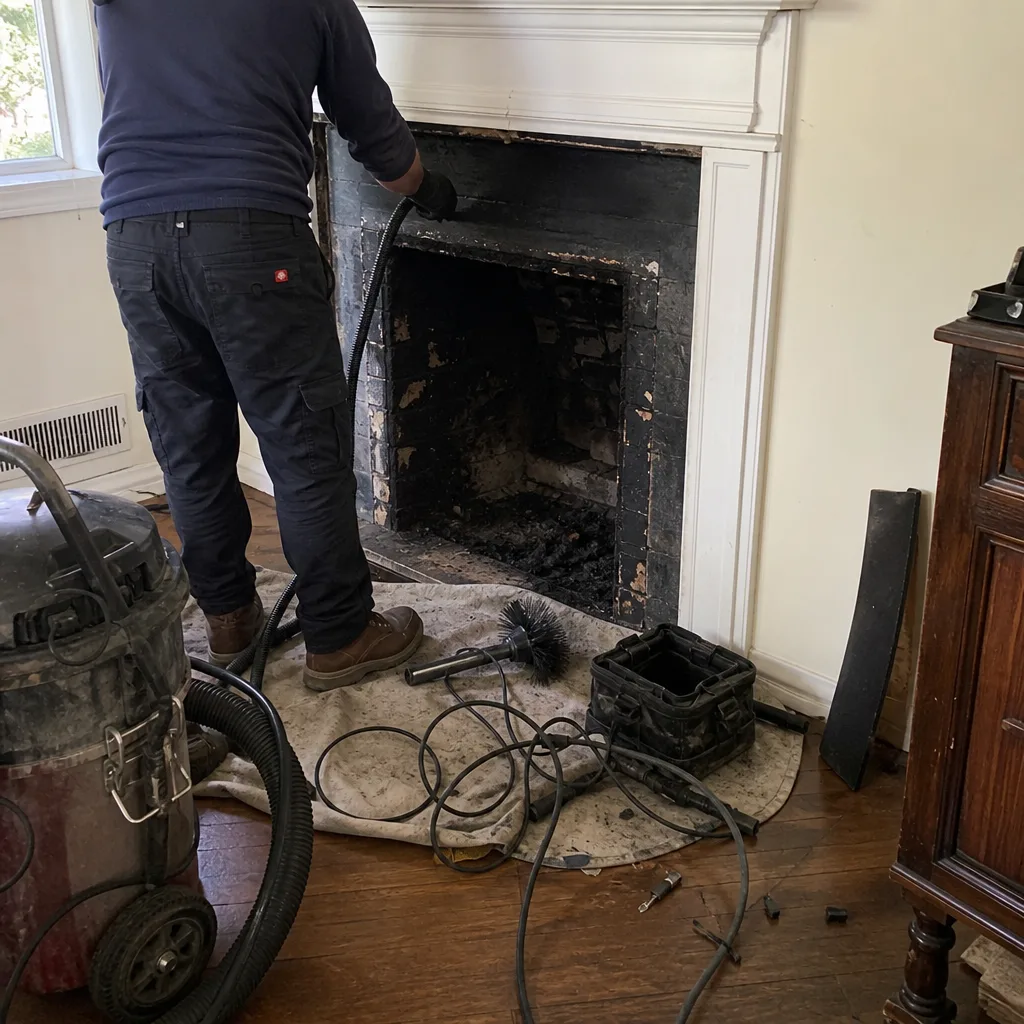 Before
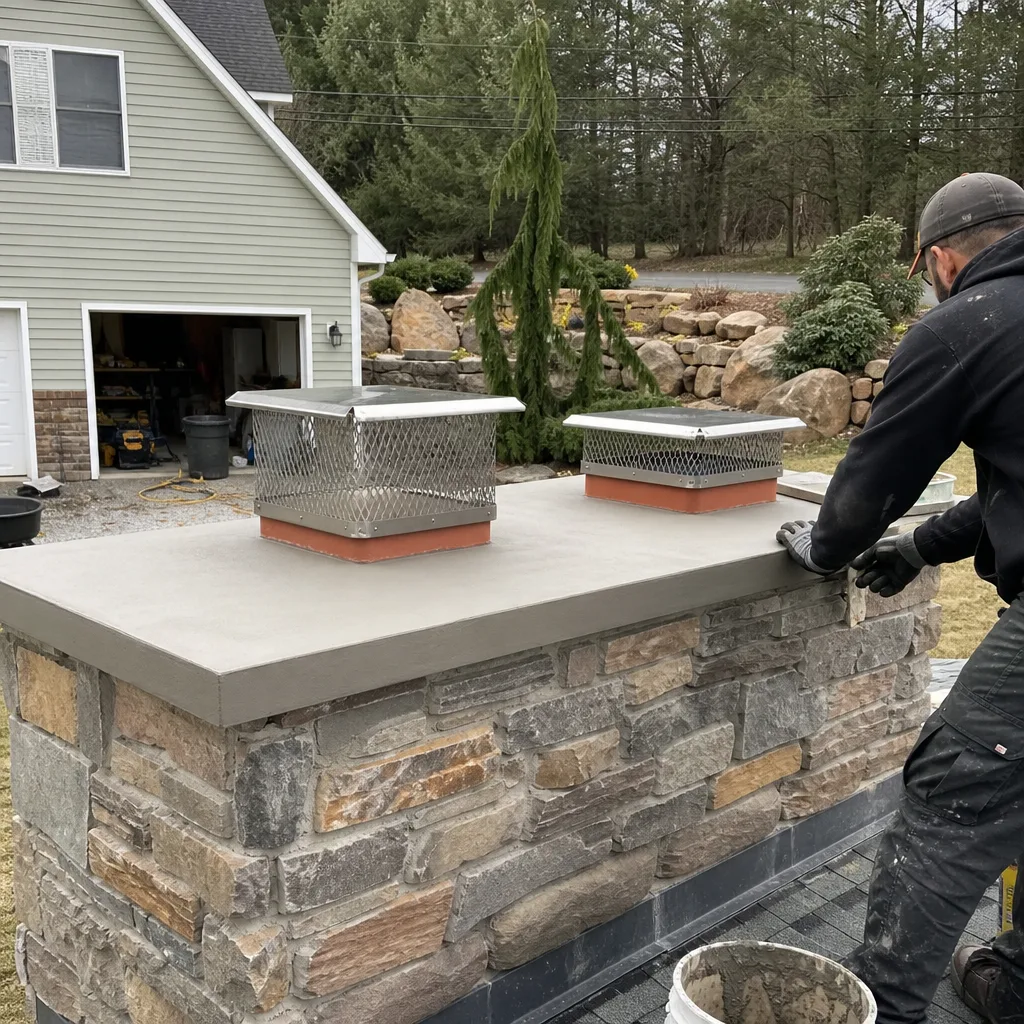 After
After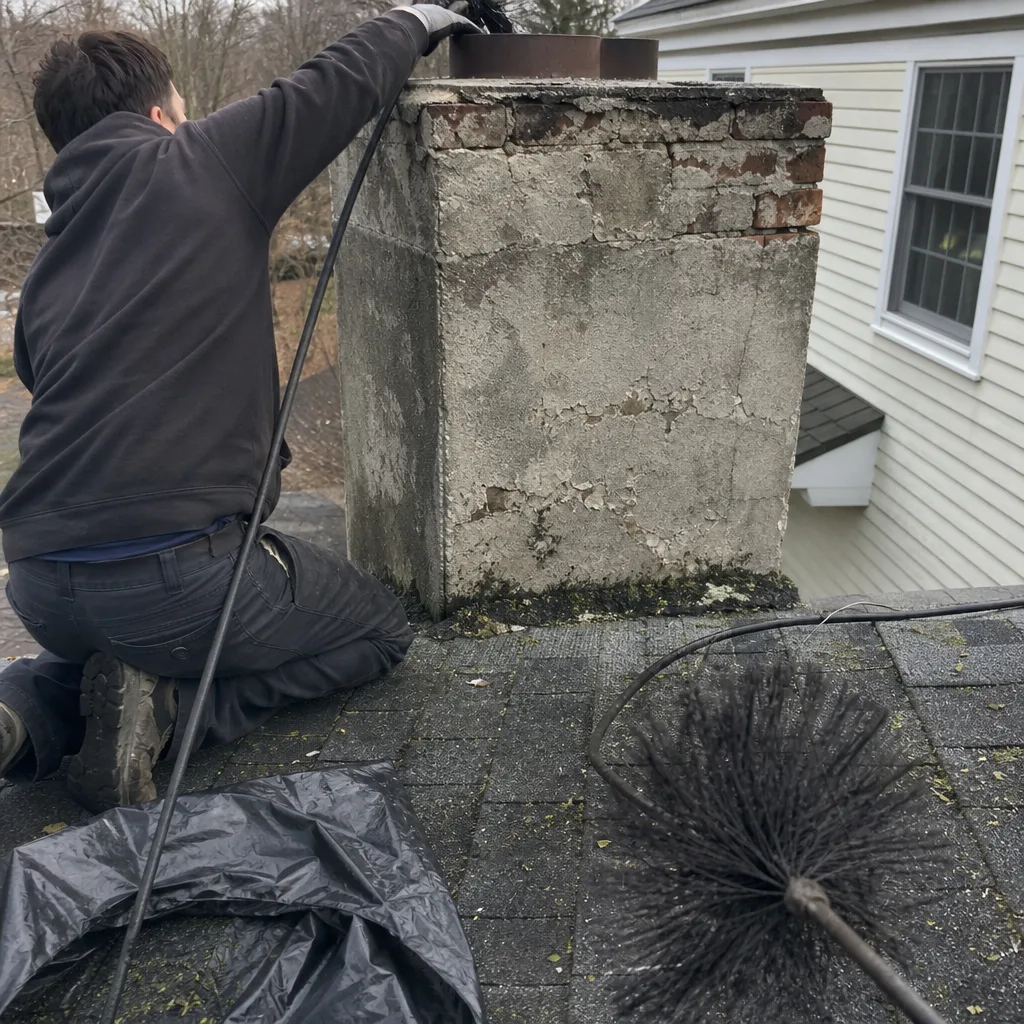 Before
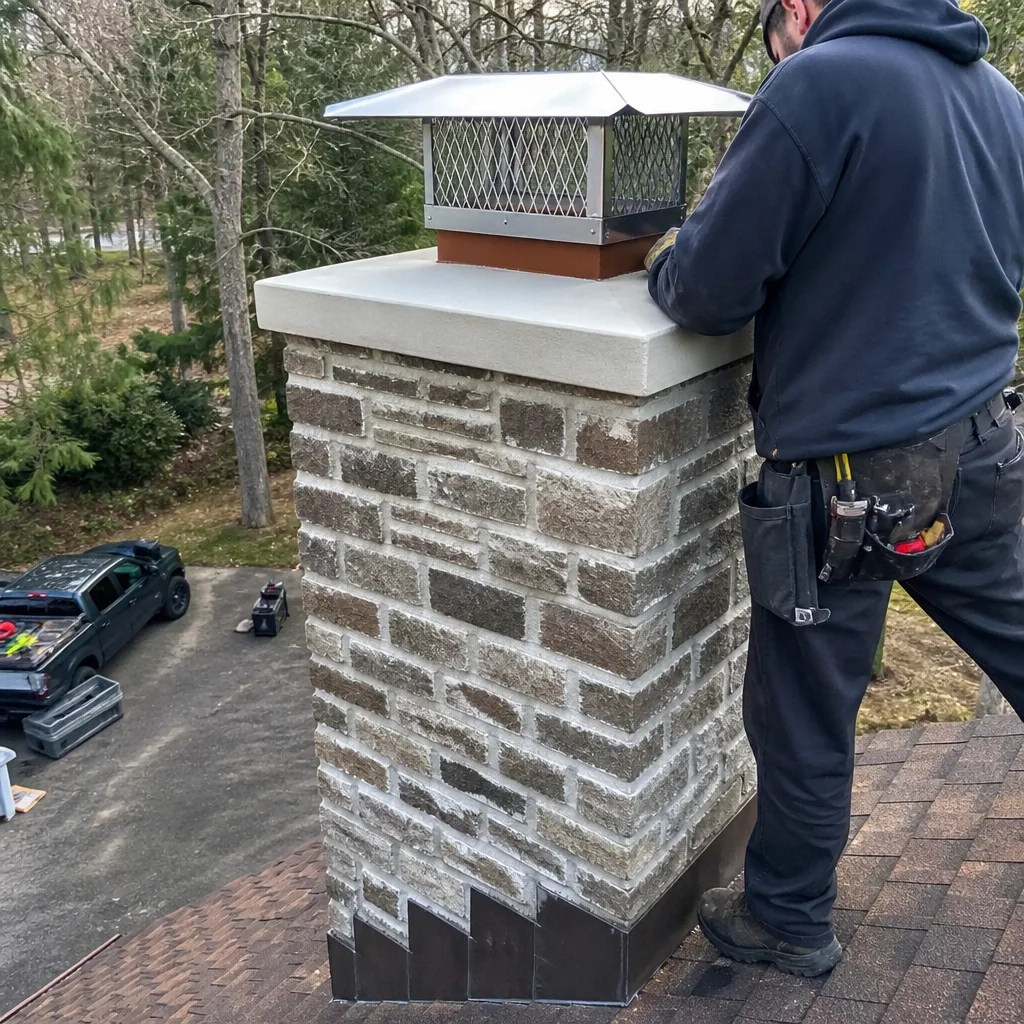 After
After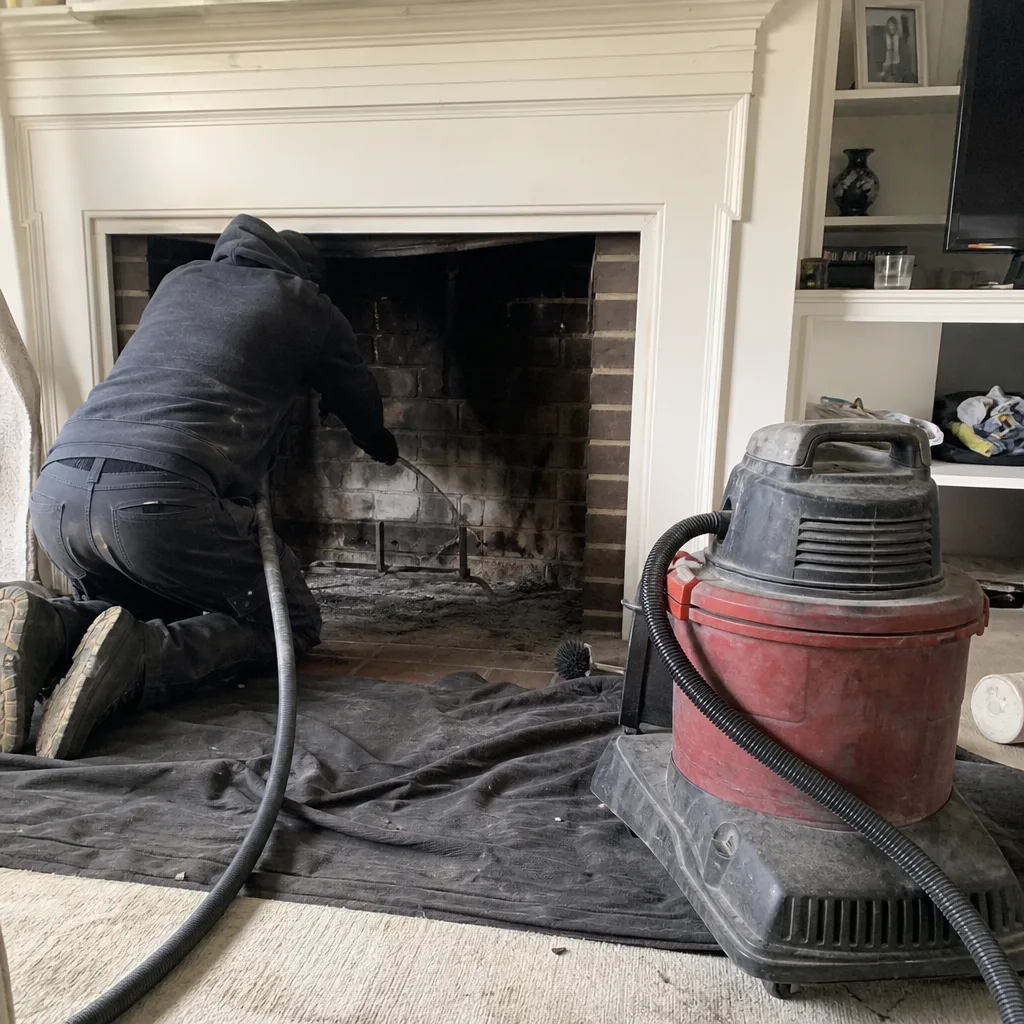 Before
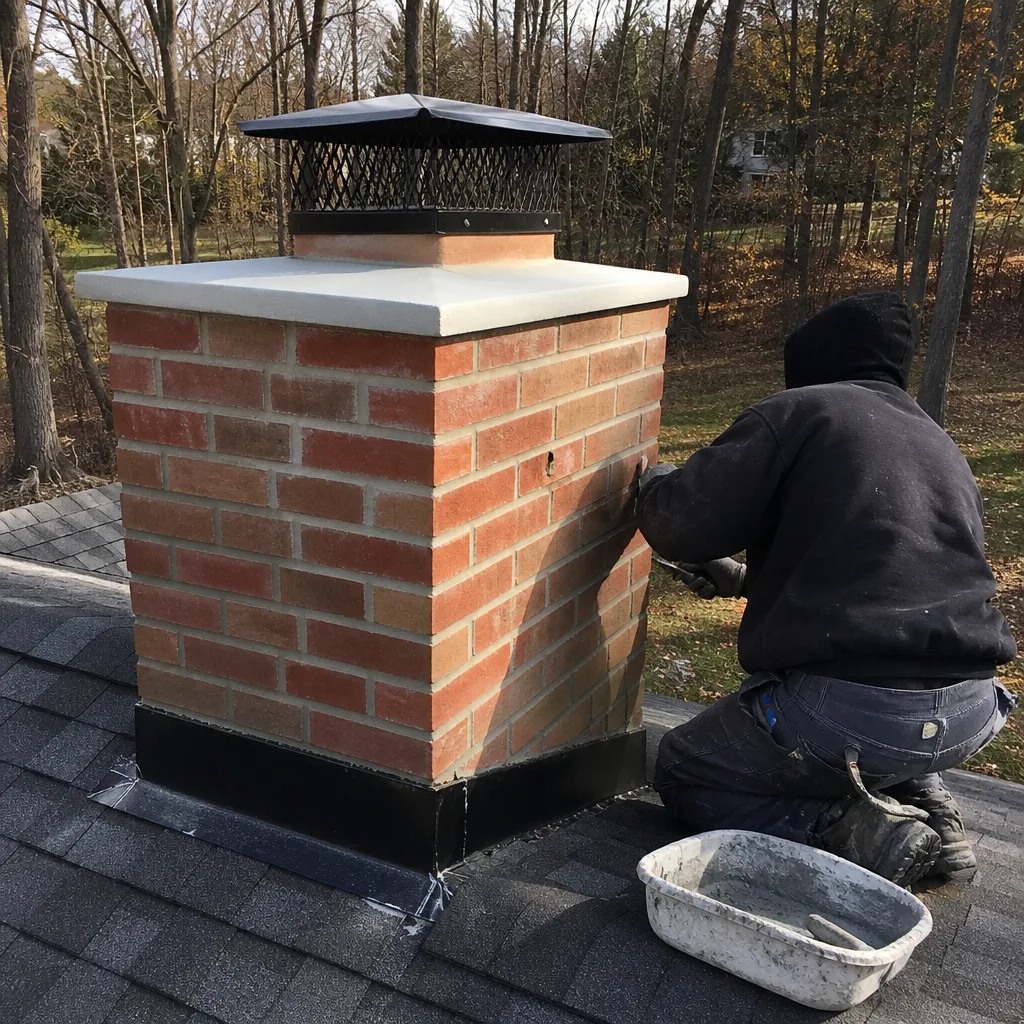 After
AfterChimney Cleaning Permits, Codes & Inspections in NY: What You Need to Know
Here’s a fact most homeowners learn too late: a standard chimney cleaning in New York almost never requires a permit, but a liner replacement or a rebuild often does, and the homeowner who treats those two jobs as the same category can end up with a denied insurance claim after a chimney fire. It happens more than people think. A chimney liner replacement done without a permit in New York can be flagged at resale or, worse, become an insurance coverage dispute after a fire, because the adjuster’s first question is usually who did the work and whether the municipality signed off on it. We’ve worked Westchester County since 1999, and we’ve walked homeowners through this distinction more times than we can count. This guide draws the line clearly.
Quick Answer
Routine chimney sweeping and most minor repairs in New York do not require a permit. However, liner replacements, rebuilds, and structural alterations typically cross from maintenance into work that requires a permit under the Residential Code of New York State, and Westchester County municipalities like Yonkers, White Plains, and Mount Vernon have their own layered requirements that are not identical. If you’re planning anything beyond a sweep, confirm the permit threshold before work starts.
Table of Contents
- Chimney Cleaning vs. Chimney Repair: Where the Permit Line Falls
- What the Residential Code of New York State Actually Requires
- How Westchester County Municipalities Layer on Top of State Code
- What an NFPA 211-Compliant Inspection Report Is and When You Need One
- The Unlicensed Contractor Insurance Gap for Liner Work
- The One Question to Ask Your Sweep That Reveals Permit Knowledge
- A Practical Step-by-Step for Homeowners in Westchester County
- Common Mistakes to Avoid
- When to Call a Professional
- Frequently Asked Questions
- The Bottom Line
Chimney Cleaning vs. Chimney Repair: Where the Permit Line Falls
The permit threshold in New York boils down to one distinction: maintenance versus alteration. A cleaning is maintenance. It involves removing creosote, soot, and debris from the flue using brushes, rods, and a vacuum. Nothing structural changes. The chimney remains exactly as it was, just cleaner. No municipality in Westchester County requires a permit for that, the same way nobody needs a permit to change furnace filters or clean gutters.
Repairs start to drift toward permit territory when the work changes how the chimney functions or involves its structure. The Residential Code of New York State (RCNYS), which governs one- and two-family dwellings, classifies a liner as part of the chimney system. Replacing a liner, rebuilding a crown, repointing more than a small patch, or rebuilding any portion of the masonry above the roofline crosses from upkeep into alteration. Once you’re altering, the building department generally wants to see drawings or at least a permit application before the work starts.
Here’s the practical breakdown we use when a homeowner in Westchester County asks us whether their job needs a permit:
- Chimney sweep or cleaning: No permit. Done with brushes, rods, a vacuum, and a camera inspection afterward. This is routine maintenance.
- Chimney cap or damper replacement: Usually no permit, because these are accessory components that don’t change the flue’s structural integrity. Some municipalities differ, so worth a call.
- Minor mortar repointing (a few square feet): Often no permit if it’s cosmetic and isolated. But extensive repointing that rebuilds multiple courses of brick can trigger a permit review.
- Crown repair or rebuild: This is where it gets gray. A small crack sealed with a proper crown coat is maintenance. A full crown rebuild that requires removing and reforming the top of the chimney is generally an alteration.
- Chimney liner replacement: Permit required in most New York municipalities. The liner is a structural and safety component, and its replacement changes the flue’s capacity and material.
- Chimney rebuild (partial or full, above or below the roofline): Permit required. No ambiguity here.
Your flue doesn’t care how the fire looks. It cares how it breathes. And the building department cares whether the work was done to code. Those two realities drive the entire permit question.
What the Residential Code of New York State Actually Requires
The Residential Code of New York State is the state’s adoption of the International Residential Code with New York amendments. It’s not a suggestion. It’s the legally enforceable standard for one- and two-family homes. The RCNYS has an entire chapter on chimneys and fireplaces, and that chapter specifies materials, clearances, and installation methods for everything from masonry fireplaces to factory-built chimneys.
The relevant sections for homeowners include provisions on flue sizing, liner materials, termination heights, and clearances to combustibles. When a liner fails and needs replacement, the RCNYS requires the new liner to be properly sized for the connected appliance and the existing flue. That’s not just a suggestion from the liner manufacturer. It’s code. And code compliance is what the permit process is supposed to verify.
What triggers a permit isn’t always obvious to a homeowner. The RCNYS requires a permit for work that involves the “construction, enlargement, alteration, repair, movement, demolition, or change in occupancy” of a building or structure. A liner replacement is a repair that qualifies. A rebuild is a repair that qualifies. Even some extensive masonry work qualifies. The key phrase to understand is “alteration.” Once the work alters the chimney system as it was originally constructed or previously approved, the permit requirement kicks in.
What about the flip side? The RCNYS also includes ordinary repairs as an exemption. The phrase ordinary repairs covers work that replaces existing components with equivalent components without changing the structure or the system’s function. Replacing a rusted damper plate with a comparable one? Ordinary repair. Replacing a cracked flue tile with a stainless steel liner? That changes the flue’s material, capacity, and code classification. That’s an alteration. That requires a permit.
The practical takeaway: don’t assume a licensed sweep automatically handles permits. Asking whether a permit is required for your specific job, and whether the contractor pulls it, is the homeowner’s responsibility. If the contractor says no permit is needed, have them explain why in writing. If the building department later disagrees, the written explanation will serve you better than a verbal assurance.
How Westchester County Municipalities Layer on Top of State Code
Here’s the part that trips up homeowners who have done their homework on state code but not on local building departments. Westchester County has more than forty municipalities, and each one has the authority to adopt stricter standards than the state minimums. Some do. The result is a patchwork where the same chimney liner job might require a permit and an inspection in one town and only a permit in the next.
Yonkers, the largest city in the county, operates its own building department with its own fee schedule and inspection protocols. White Plains also runs a robust building department, and its review process for chimney work that involves structural changes tends to be more detailed than what smaller villages require. Mount Vernon has its own requirements and, like the other cities, expects contractors to be familiar with its specific application forms and inspection sequencing.
We recently walked through a liner replacement in a village near White Plains where the building department required a pre-installation inspection and a post-installation inspection, each with a fee and a scheduled window. The homeowner was surprised, because their neighbor in an adjacent town had a similar liner replaced with only a final inspection. That kind of variation is exactly what makes local knowledge matter. A national outfit that rotates crews through Westchester County may not know that a particular village requires an extra step, and the homeowner pays for that gap in delays or rework.
What should a Westchester County homeowner do before any work beyond a cleaning? Three things:
- Call the local building department and ask, in plain language, whether the specific job requires a permit. You don’t need to know the code. You need to know the answer.
- Ask what the inspection sequence looks like: one visit or two, pre- and post-installation, and whether the inspector wants to see the liner before it’s connected.
- Ask what documentation the building department wants from the contractor: license, proof of insurance, a manufacturer’s installation manual, or a completed permit application.
Doing those three things takes about twenty minutes and eliminates most of the surprises. We’ve made these calls hundreds of times. They don’t bite.
What an NFPA 211-Compliant Inspection Report Is and When You Need One
NFPA 211 is the National Fire Protection Association’s standard for chimneys, fireplaces, vents, and solid fuel burning appliances. It’s not a law by itself, but many municipalities and insurance companies treat it as the recognized benchmark for chimney safety. New York’s building codes don’t incorporate NFPA 211 wholesale, but the fire service and the insurance industry reference it regularly. That’s why an NFPA 211-compliant inspection report carries weight.
The standard specifies three levels of inspection. A Level 1 inspection is the one done during routine maintenance: the sweep examines the readily accessible portions of the chimney, the flue, and the connected appliance. If the system hasn’t changed since the last cleaning and is being used under the same conditions, Level 1 is appropriate. A Level 2 inspection is required when the property changes hands, when a chimney fire has occurred, when the system is being evaluated for a different appliance or fuel type, or when the building has been affected by a structural event like an earthquake or a lightning strike. A Level 2 inspection includes everything in Level 1 plus attic and crawlspace access and a video scan of the flue interior.
Level 3 inspections are reserved for cases where a Level 1 or Level 2 inspection suggests a hidden hazard that requires removing portions of the building to access the chimney. That’s rare, and it’s the kind of inspection that happens after a serious chimney fire or a major structural failure.
When might your insurer or municipality require an NFPA 211-compliant report? In Westchester County, we’ve seen insurance companies request a Level 2 inspection report after a chimney fire claim, before renewing a policy on an older home, or when a home is being purchased and the inspector flags the chimney. Some municipalities also require a copy of a chimney inspection report when a building permit is being closed out. The report the sweep gives you should state clearly what level of inspection was performed, what was observed, and what the recommendations are. If it doesn’t, it’s a sales sheet, not an inspection report.
We provide camera footage and a plain-English verdict, every time, no exceptions. That’s the standard an NFPA 211-compliant report is trying to reinforce. You should know what your chimney looks like inside, not just what someone wants to sell you.
The Unlicensed Contractor Insurance Gap for Liner Work
This is the section that most guides skip, and it’s the one that has changed outcomes for homeowners we’ve talked to. When you hire an unlicensed contractor to replace a chimney liner in New York, you create a documented insurance gap that most people don’t discover until they file a claim.
Here’s how it works. Homeowners insurance policies typically include an exclusion for damage caused by faulty workmanship or by a contractor’s failure to follow code. Some policies also include conditions about the work being done by licensed professionals. When a chimney fire happens, the adjuster doesn’t just look at the fire. The adjuster looks backward at the work history. Who installed the liner? Was the contractor licensed in the appropriate trade? Was a permit pulled? Was the work inspected and signed off? If the answers are no, the claim can be denied on the grounds that the fire was caused or exacerbated by improperly performed work that the homeowner chose to have done without the required approvals.
We’ve sat with homeowners in Westchester County who were told exactly that after a fire. The liner had been replaced three years prior by someone who gave a low quote, did the work in a day, and was unreachable afterward. The liner was undersized for the flue. The fire started near the top of the chimney, where the liner didn’t terminate correctly. The insurance company denied the claim because the work was unpermitted and the contractor was unlicensed. The homeowner paid for the rebuild out of pocket. It cost more than the original liner job ten times over.
The reason liner work specifically creates this gap is that a liner is not just a metal tube. It’s the component that contains the heat, the sparks, and the creosote ignition. When a liner fails or is installed incorrectly, the consequences are chimney fires, carbon monoxide intrusion, and structural damage to the house. Insurance companies know this. That’s why they ask about the liner when a chimney fire claim comes in.
What should you do? Before you hire anyone for liner work, verify the contractor’s license, confirm the permit requirement with your municipality, and require that the contractor pull the permit and schedule the inspection. If the contractor resists any of those three steps, walk away. A lower price is not worth a denied claim and an uninsurable house.
The One Question to Ask Your Sweep That Reveals Permit Knowledge
If you want to know within thirty seconds whether the company you’re talking to understands the permit threshold, ask this: “Can you walk me through when a job crosses from maintenance to alteration and a permit is required?”
A knowledgeable sweep will answer without hesitating. They’ll tell you that cleaning, cap replacement, and minor mortar work are maintenance and don’t need a permit in most New York municipalities. They’ll tell you that liner replacement, crown rebuilds, and masonry rebuilds are alterations and generally do require a permit, with local variation. They’ll mention their familiarity with the local building department’s protocols, the inspection sequence, and how long the permit process takes.
A national chain that rotates crews and treats chimney work as a commodity will often fumble that question. They’ll say something vague about handling permits or about no permit being needed for most of their work. They may not know whether Yonkers or White Plains or Mount Vernon has a specific filing requirement. They’re not lying. They just don’t know. And if they don’t know the permit threshold, they don’t know what they’re doing in enough detail to protect you.
Wendell has been inside more chimneys in Westchester County than he can count, and he can tell you which village building inspector wants the manufacturer’s installation manual attached to the application and which one wants to see the old liner in the driveway before signing off. That knowledge comes from doing the work here since 1999, not from a call center in another state. Ask the question. The answer will tell you what you need to know.
A Practical Step-by-Step for Homeowners in Westchester County
Here’s the sequence we walk our customers through when they’re planning more than a sweep. Follow it in order and you’ll avoid most surprises.
- Get the chimney evaluated first. Before you decide what work needs doing, have a Level 1 or Level 2 inspection done. You want camera footage of the flue and a written report with the photos. That becomes your baseline.
- Determine the work category. Use the maintenance versus alteration distinction above. Cleaning, cap, minor mortar: no permit. Liner, crown rebuild, masonry rebuild: likely a permit. Be honest about which category the job falls into, even if the answer is inconvenient.
- Call the building department. The municipality where the house sits, not the county and not a neighboring town. Ask the direct question: does this job require a permit, and what is the process? Ask about fee amounts and inspection scheduling windows.
- Ask the contractor the permit question. The one-question test above. If they hesitate or cannot articulate the threshold, call someone else.
- Verify the contractor’s license. New York does not license chimney sweeps at the state level the way it licenses electricians, but many Westchester County municipalities maintain their own contractor licensing or registration lists. Ask for the license number and check it with the building department. A contractor who won’t provide a license number is giving you an answer.
- Get the scope and the permit plan in writing. The price you hear on the phone should be the price on the invoice. If the quote changes when the form arrives or after the work starts, that’s a pattern, not an accident. Include the permit fee, the inspection scheduling, and the manufacturer’s installation manual in the written scope.
- Confirm the closeout. After the work is done and the inspection has passed, make sure you receive a copy of the signed permit card or the building department’s approval. File it with your home records. You’ll want it at resale and, if anything ever goes wrong, for your insurance claim.
Common Mistakes to Avoid
- Assuming every sweep pulls permits automatically. Most don’t, and many companies will happily do liner work without a permit if you don’t ask. The permit is your protection. Make sure it gets pulled.
- Treating Yonkers, White Plains, and Mount Vernon as interchangeable. They’re not. Each has its own building department, fee schedule, and inspection sequence. What works in one may not work in another.
- Hiring the low bid without asking about insurance. If the contractor’s insurance lapsed or doesn’t cover chimney work, your homeowner’s policy becomes the only safety net. That’s a bad place to be.
- Confusing a cleaning with an inspection. A sweep removes creosote. It doesn’t document the flue’s structural condition. Ask for a camera inspection and a written report. You want the footage, not just the brush.
- Waiting until a chimney fire to find out there was no permit. By then it’s too late to fix the paperwork. The claim will be reviewed, and the missing permit will be part of the review.
- Thinking a verbal assurance covers you. If the contractor says no permit is needed, get it in writing with an explanation. If the building department disagrees later, you’ll have something to show.
- Neglecting the inspection closeout. A permit that was pulled but never signed off is not proof of compliance. Confirm the final inspection happened and keep the approval.
When to Call a Professional
If you’ve noticed a chimney fire before, if you smell smoke in the house after the fire’s been burning for a while, if you see white staining on the exterior brick, or if your smoke detector near the fireplace keeps going off for no obvious reason, you need a professional evaluation, not a guess. The same applies if you bought a home in Westchester County and can’t find any record of the last sweep or inspection. And if you’re planning a liner replacement, a crown rebuild, or any masonry repair, call someone who knows the permit process in your specific municipality. Top Hat Chimney offers free estimates in Westchester County - call (914) 537-6479. Ask for Wendell.
Frequently Asked Questions
No. Routine chimney cleaning is maintenance, not construction, and no permit is required anywhere in New York State. The work involves removing creosote, soot, and debris from the flue. If you’re only getting a sweep, the building department doesn’t need to be involved. Call (914) 537-6479 to schedule your cleaning with a live person, any time.
Liner replacements, partial or full chimney rebuilds, and extensive masonry repair generally require a permit under the Residential Code of New York State. The exact requirements vary by municipality: Yonkers, White Plains, and Mount Vernon each have their own building department with its own forms and inspection sequences. Ask your contractor which municipality your home is in and what the local process is. If they can’t answer, that’s a warning sign.
Once a year, burn or no burn. Chimneys break in the off-season too. Even if you haven’t used the fireplace much, animals can nest, masonry can shift, and moisture can start working on the flue. An annual sweep with a camera inspection catches small problems before they become expensive ones. In Westchester County, the freeze-thaw cycles make masonry especially vulnerable, so the annual visit matters even more.
If the work is never inspected and a fire or carbon monoxide incident occurs, your insurance company may deny the claim on the grounds that the work was unpermitted and potentially non-compliant. The missing permit becomes evidence that the liner may not have been installed to code, and the burden shifts to you to prove otherwise. You may also hit a problem at resale, when the buyer’s inspector asks for documentation that doesn’t exist. Pull the permit.
You need a new liner if the camera inspection shows cracks, gaps, or separation between the flue tiles, if the liner is undersized for the connected appliance, or if the existing liner has failed in a way that no longer contains the heat and combustion products. You do not need a new liner just because it’s old or because a company’s sales model depends on upselling liners. First-degree creosote is a brush job. Third-degree is a glaze. Catch it early, and ask for the camera footage before you agree to any liner work. If the company won’t show you the footage, get a second opinion.
No, there’s no universal requirement for a chimney inspection at resale in Westchester County. But many home inspectors will flag the chimney, and many buyers will ask for a Level 2 inspection before closing. Insurance companies have also been known to request one on older homes. If you’re selling, get the chimney inspected before you list, so you’re not negotiating repairs under deadline pressure. If you’re buying, insist on camera footage, not just a verbal okay.
You can, but most homeowners shouldn’t. Climbing onto a roof with chimney rods is genuinely dangerous, and without a camera you won’t know whether the flue is actually clean. We’ve seen do-it-yourself jobs that pushed creosote deeper into the flue or damaged the liner. If you’re going to do it yourself, understand the fall risk and the fact that you won’t know what you missed without a proper inspection. Most people in Westchester County are better off calling (914) 537-6479 and letting someone who does this every day handle it.
The Bottom Line
Cleaning doesn’t need a permit. Liner replacement and structural repair usually do. The distinction between maintenance and alteration drives the whole question, and a homeowner who understands that distinction avoids the two biggest risks: an insurance claim denied because the work was unpermitted, and a chimney fire that could have been prevented with a proper inspection. Ask the permit question upfront, insist on camera footage, and verify the contractor’s license before any tool comes off the truck. In Westchester County, where local building departments layer their own rules on top of state code, that local knowledge is what keeps you out of trouble. For more guides & resources, see our blog.
If you’re not sure where your chimney stands, Top Hat Chimney home is the place to start. We offer a free second opinion on any competing written estimate, and Wendell publishes his name and license number on every job we do. Need a chimney cleaning in Westchester County? We’ll schedule it. Think you might need a chimney repair in Westchester County instead? We’ll tell you honestly, with camera footage to back it up. And if it turns out your fireplace needs more than a sweep, we’ll walk you through the permit process from the first call to the final inspection. Call (914) 537-6479. A live person answers, around the clock, and it may well be Wendell himself picking up.
Written by Wendell Pike, Owner at Top Hat Chimney, serving Westchester County since 1999.